
Market
AI compute sets infrastructure requirements that existing facilities were not designed to meet
AI workloads are changing what infrastructure must deliver, and demand for capacity is growing faster than the ability to connect and build.
The need
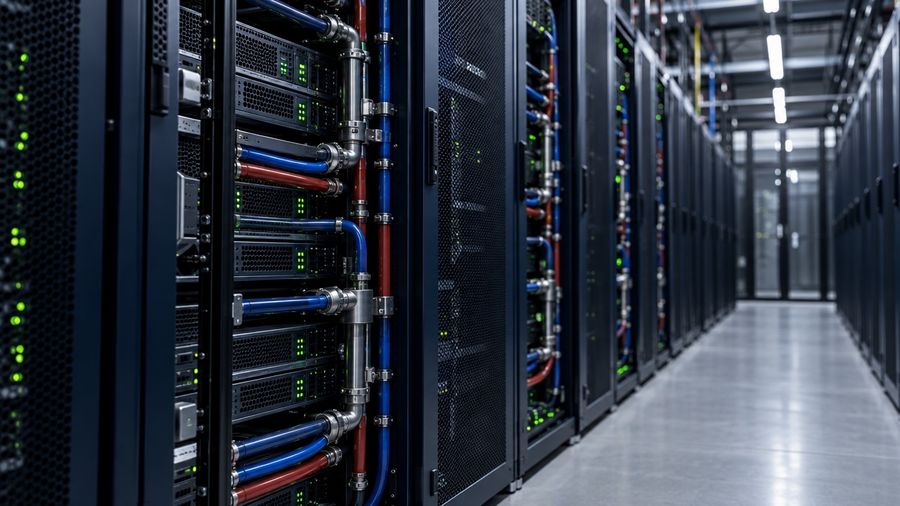
- AI training and inference workloads require high power density, liquid cooling and continuous power supply — beyond the design of traditional colocation facilities.
- The bottleneck has shifted from servers to infrastructure: building a facility requires a suitable site, a grid connection, cooling, connectivity, capital and an anchor customer.
- In Israel, too, large-scale projects are being advanced that combine data center development with energy generation and storage.
Demand for capacity is growing faster than the ability to connect and build
Worldwide: capacity is expected to nearly double
In Israel: connection demand far exceeds supply
- ~27,000 MW
- Data center grid-connection requests submitted to Noga, the system operator
- ~1,500 MW
- Capacity the electricity system has committed to connect so far
- Up to 200 MW
- Cap per new data center under the Electricity Authority framework
In the company's assessment, this gap is the opportunity: an advantage for those holding a site, a grid connection and a suitable design.
Sources: International Energy Agency (IEA), JLL, Israel Electricity Authority and Noga. The figures are forecasts and may change.